
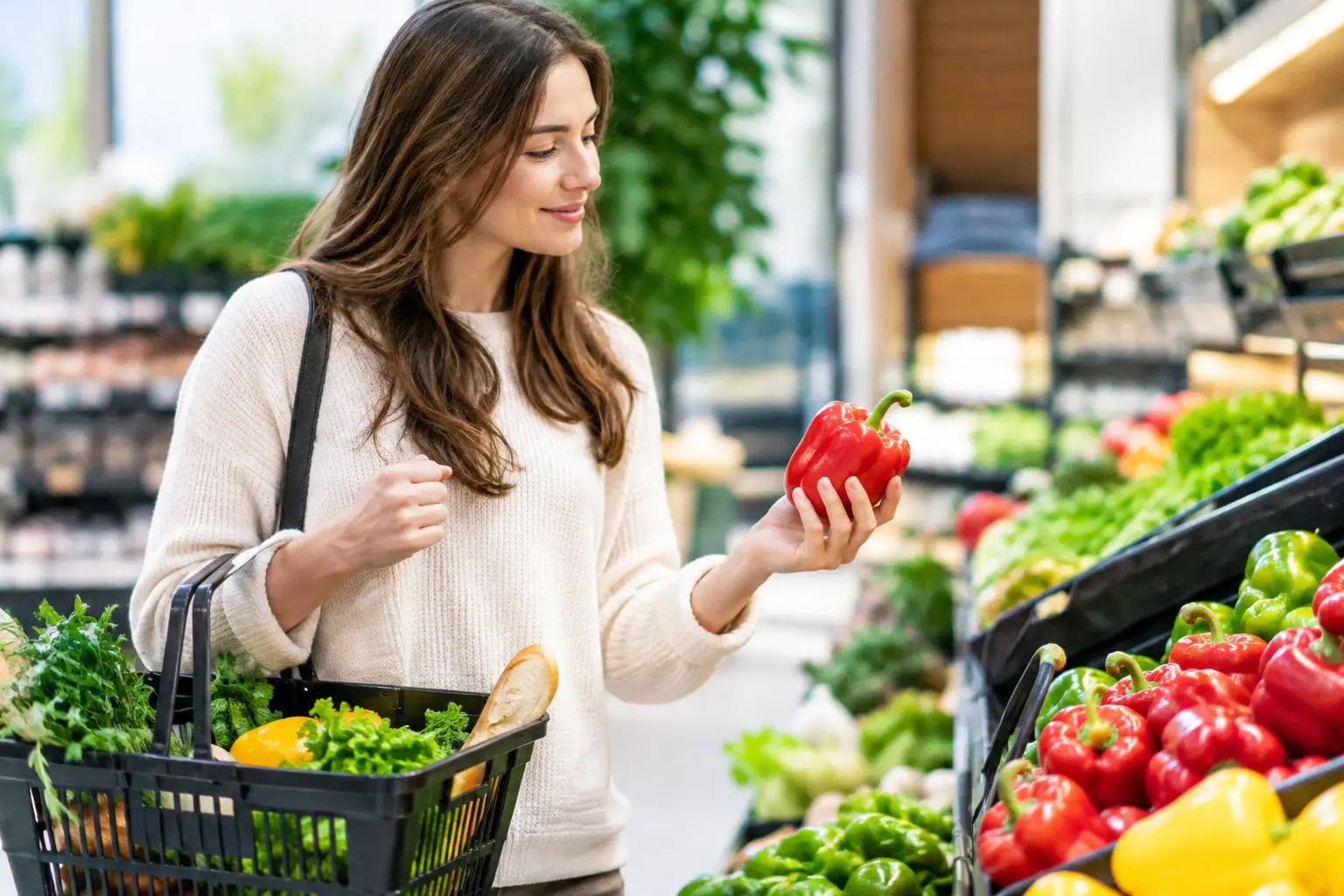
Czech Vocabulary for Grocery Shopping Made Easy

Updated: 7 days ago
A quick grocery run can feel surprisingly stressful when you do not know where to find milk, how to ask for deli meat, or what a cashier has just said. The good news is that Czech vocabulary for grocery shopping is highly practical: learn a small group of words and phrases, and you can handle most everyday stores with much more confidence.
You do not need perfect Czech to buy food independently. Start with the language you will hear repeatedly, use a few polite phrases, and let the products around you help you remember. This is useful whether you shop at a large supermarket, a neighborhood potraviny (small grocery store), or a farmers market.
Start with the words you see in every store
The Czech word for a grocery store is potraviny. You may also see supermarket, which is used much like English. A shopping cart is a nákupní vozík, while a basket is a košík. If you need a bag, ask for a taška.
At the entrance, a sign may say otevřeno (open) or zavřeno (closed). The checkout is pokladna. A self-service checkout is often labeled samoobslužná pokladna. When you are looking for a specific area, the word oddělení means department or section.
Czech supermarkets usually organize food in familiar ways, but the signs are worth learning. Ovoce a zelenina means fruit and vegetables. Pečivo is baked goods, including bread and rolls. Mléčné výrobky means dairy products, and mražené potraviny are frozen foods.
Here are the food words that will make your first few trips easier:
English | Czech |
bread | chléb |
roll | rohlík |
milk | mléko |
eggs | vejce |
cheese | sýr |
butter | máslo |
chicken | kuře |
meat | maso |
fish | ryba |
rice | rýže |
flour | mouka |
sugar | cukr |
water | voda |
coffee | káva |
beer | pivo |
Do not worry about memorizing every item at once. Choose the foods you buy each week and learn those first. If rice, lentils, yogurt, and chicken are staples in your home, those are more valuable than vocabulary for foods you never purchase.
Czech vocabulary for grocery shopping by section
Fruit, vegetables, and loose items
In the produce section, you may need to weigh your own fruit and vegetables. Look for váha, meaning scale. The word cena means price, and kilogram is commonly written as kg.
Useful produce words include jablko (apple), banán (banana), brambory (potatoes), cibule (onion), rajče (tomato), okurka (cucumber), mrkev (carrot), and salát (lettuce or salad, depending on context).
If you need a certain amount, these phrases are especially useful:
Půl kila, prosím. - Half a kilo, please.
Jedno kilo, prosím. - One kilo, please.
Můžu si to zvážit tady? - Can I weigh it here?
You may hear the word kus, meaning piece. For example, one cucumber or one avocado can be sold za kus - per piece - rather than by weight.
Bread, deli counters, and fresh food
The bakery counter can be one of the best places to practice Czech because the exchange is short and predictable. Chléb is bread, rohlík is a common Czech bread roll, and houska is another type of roll. Koláč is a sweet pastry, while buchta can refer to a cake-like baked treat.
At a deli counter, uzeniny means cold cuts and processed meats. You might see šunka (ham), salám (salami), and sýr (cheese). To ask for something, say:
Prosím dvě stě gramů sýra. - Two hundred grams of cheese, please.
Můžete to nakrájet? - Can you slice it?
Je to všechno, děkuji. - That is all, thank you.
You do not have to build long sentences. A smile, the product name, an amount, and prosím will usually work well. Still, adding a complete phrase helps you feel more prepared and makes the interaction smoother.
Dairy, meat, and pantry basics
Look for mléčné výrobky for dairy. Along with mléko (milk), you will see jogurt (yogurt), tvaroh (quark or curd cheese), smetana (cream), and máslo (butter). Be careful with zakysaná smetana, which is sour cream, not regular cooking cream.
For meat, kuřecí means chicken, vepřové means pork, and hovězí means beef. Mleté maso is ground meat. If you do not eat pork, checking labels matters because it is common in prepared foods, sausages, and deli items.
In the pantry aisles, learn těstoviny (pasta), rýže (rice), luštěniny (legumes), olej (oil), sůl (salt), pepř (pepper), and koření (spices). These words also help when you are reading recipes in Czech or asking someone where an item is located.
Read labels with more confidence
Labels can save you from buying the wrong product, particularly when packages look similar. Složení means ingredients. Alergeny means allergens. Datum spotřeby is the use-by date, usually for foods that should not be eaten after that date. Minimální trvanlivost do is best before, which is more flexible for many shelf-stable products.
If you have dietary needs, these words are useful: bez lepku (gluten-free), bez laktózy (lactose-free), vegetariánské (vegetarian), and veganské (vegan). Pálivé means spicy, while sladké means sweet.
You will also see akce, meaning a promotion or sale. A yellow or red price tag often signals a discount, but check the small print. Some offers apply only with a loyalty card, for a certain number of items, or during specific dates. The lowest-looking price is not always the price you will pay.
Useful phrases at checkout
At the cashier, the most common question is Kartou, nebo hotově? - By card or cash? You can answer Kartou, prosím for by card, please, or Hotově, prosím for cash, please.
You may be asked Máte zákaznickou kartu? This means, “Do you have a loyalty card?” If not, simply say Nemám, děkuji - I do not have one, thank you.
For a bag, say Prosím tašku - A bag, please. If you brought your own, you can say Tašku nepotřebuji, děkuji - I do not need a bag, thank you.
A cashier may ask Chcete účtenku? - Would you like a receipt? Answer Ano, prosím or Ne, děkuji. At the end, Děkuji, na shledanou - Thank you, goodbye - is a polite and natural way to leave.
Practice in a way that fits real life
The fastest way to retain grocery vocabulary is to use it before, during, and after shopping. Before you leave, write a short shopping list with Czech words next to the English ones. In the store, try to identify aisle signs and labels without translating every word. At home, say the names of what you bought while putting it away.
It depends on your comfort level whether you speak Czech immediately at the counter or begin with labels and simple greetings. Both are valid. The goal is not to perform perfectly for strangers. The goal is to make each trip a little more independent.
A structured course can also turn these small encounters into lasting progress. GoCzechGuru focuses on practical Czech for daily life, so the language you practice at the store can support wider goals such as appointments, services, work, and A2 permanent-residence preparation.
On your next grocery trip, choose just three new words and one phrase to use. That might be pečivo, účtenka, and akce, plus Prosím tašku. Small, repeated wins are how a supermarket becomes one more place where Czech feels usable.

Comments